Introduction
Oldany Island is a large, uninhabited tidal island spanning 500 acres (200 hectares) in the Assynt-Coigach National Scenic Area of Sutherland, Northwest Scotland. Accessible by foot from the mainland at low tide, its highest point is Sìdhean nan Ealachan at 104 metres. The island is privately owned and renowned for its pristine white sandy beaches, sheltered lagoons, and early Medieval burial sites.
Where is Oldany
Island Experience
Oldany Island
Formerly known as Oldney Island, this uninhabited land sits in Assynt, Sutherland. Specifically, it is a large tidal island located at the southwestern entrance to Eddrachillis Bay. It covers an area of 200 hectares. Furthermore, its highest point, Sidhean nan Ealachan, reaches 104 metres.
The settlement of Oldany occupies the adjacent mainland. Historically, the island has provided grazing land for sheep. The Turner family currently owns the island.
Summer Visit
Oldany Island immediately caught our eye as a potential safe anchorage. According to the nautical charts, the island featured several secluded lagoons. These sheltered bays seemed ideal for a quiet stay. Fortunately, the charts did not disappoint us.
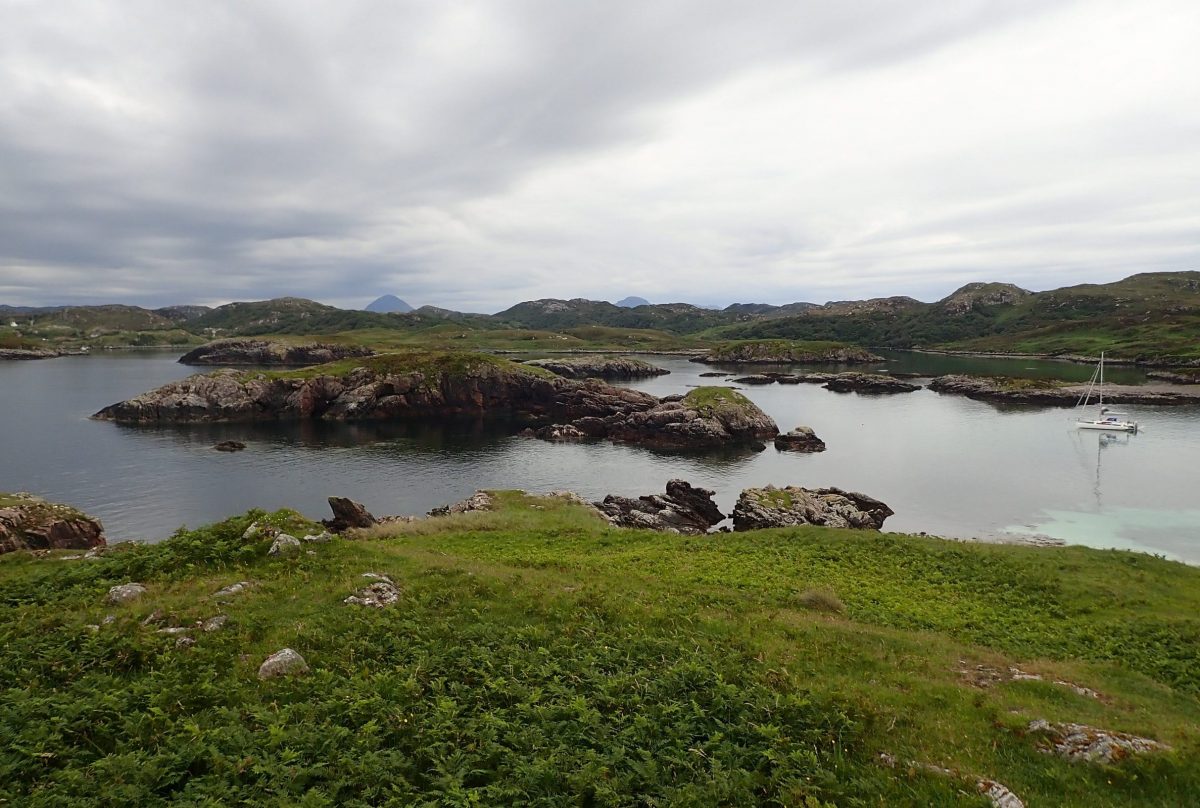
As we approached, the rugged shoreline revealed a series of craggy inlets. Each spot offered charm but presented a challenge. Specifically, these inlets tended to dry out at low tide. Toward the eastern end, we discovered inviting, landlocked lagoons.
However, anchoring there felt risky. We preferred spots where we could sail away at a moment’s notice. Ultimately, the island offered a fascinating glimpse into Scotland’s untamed beauty. It remains perfect for sailors seeking remote tranquility.
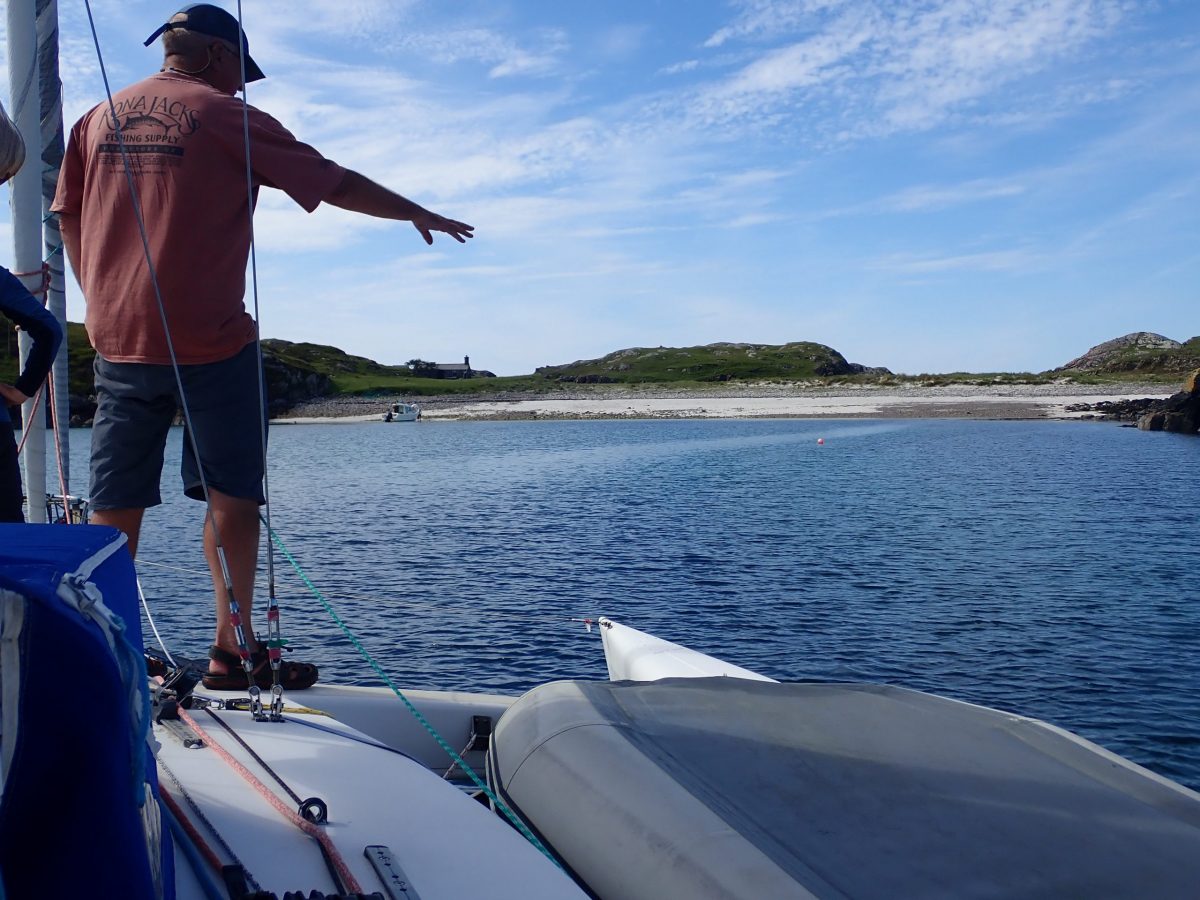
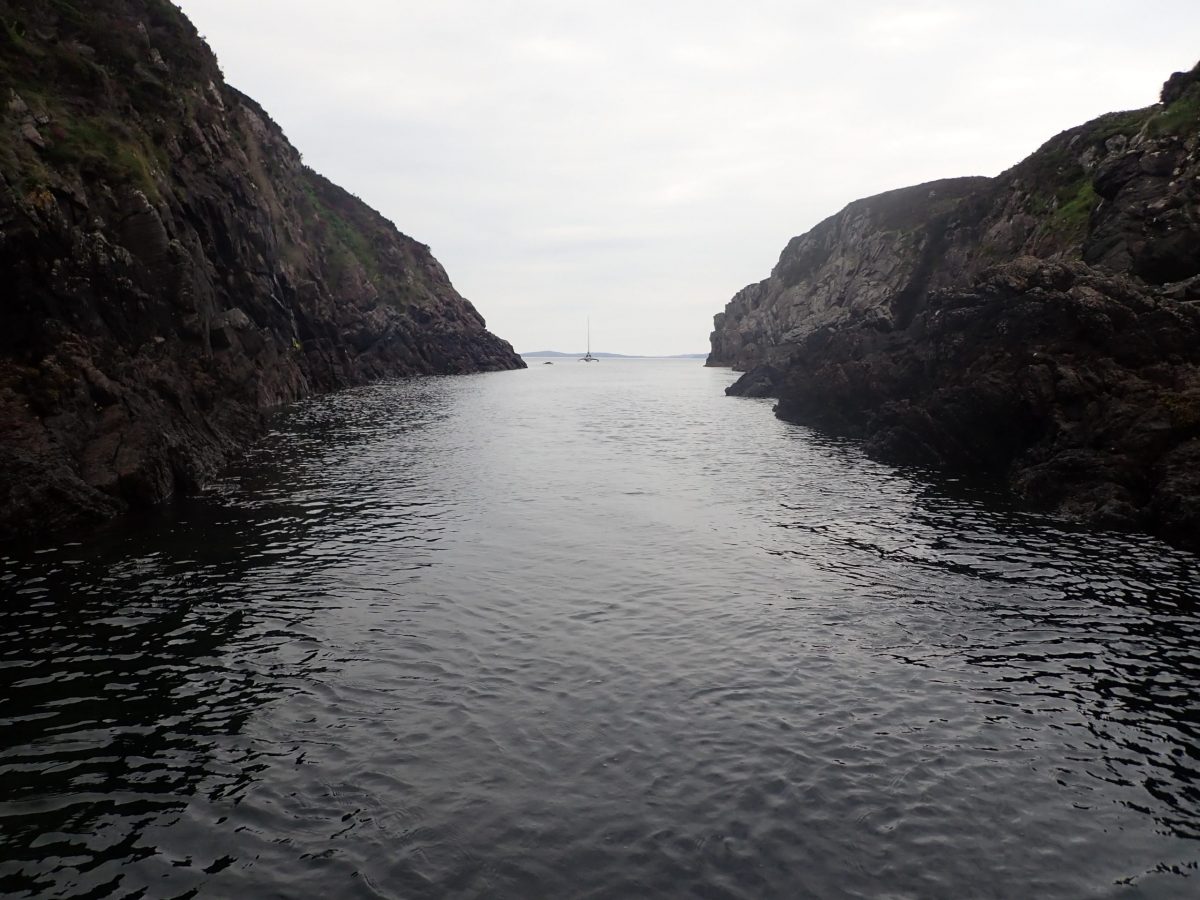
A careful entrance to the Bay
The Perfect Anchorage
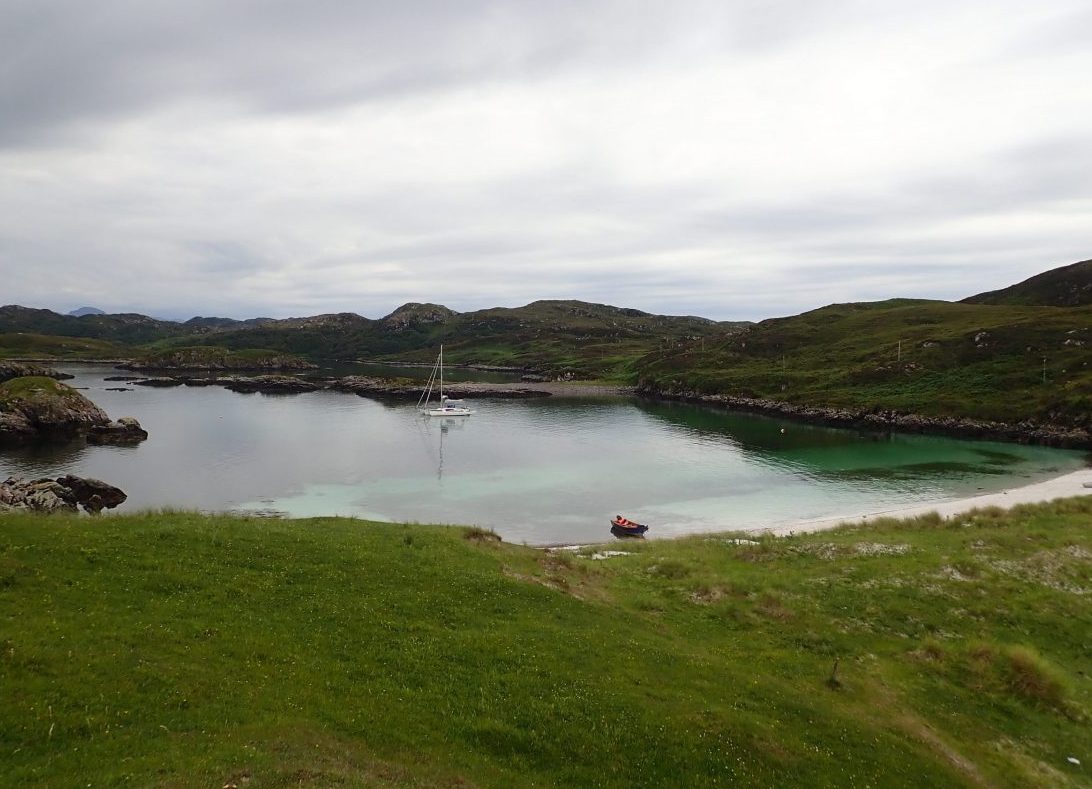
While exploring the coastline of Oldany Island, one secluded bay stood out. Consequently, I guided our sailboat around a rocky headland. This revealed a breathtaking scene that captivated Gordon and Ranald. My crew grinned as we entered this ideal shallow anchorage.
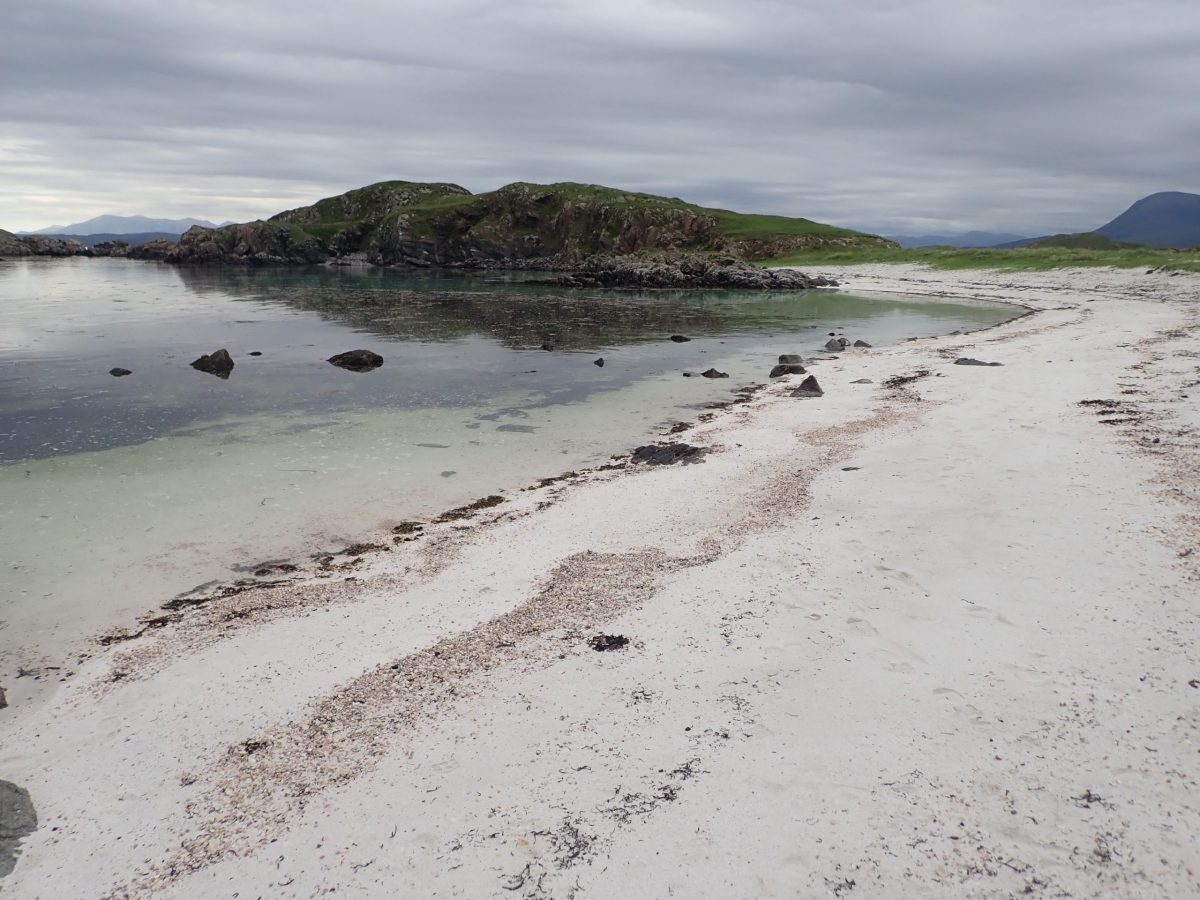
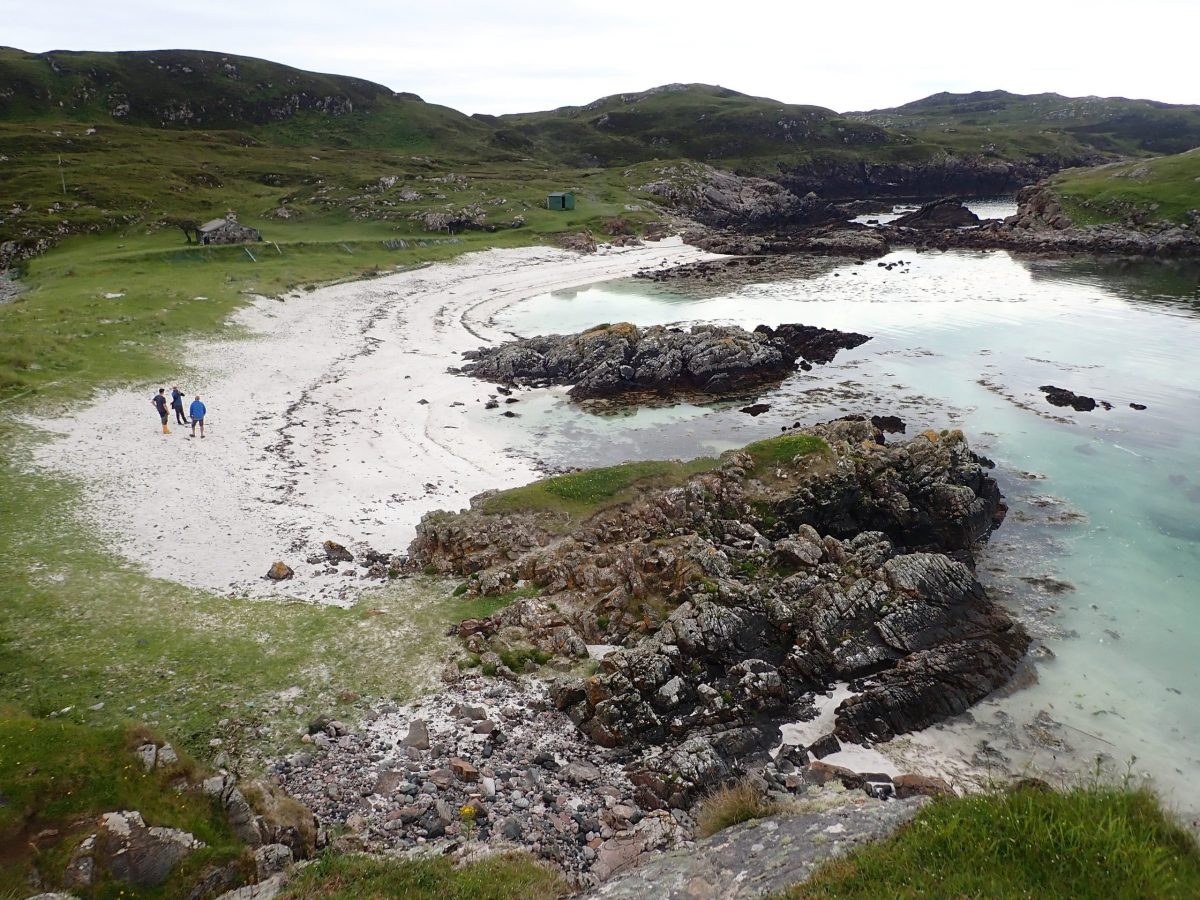
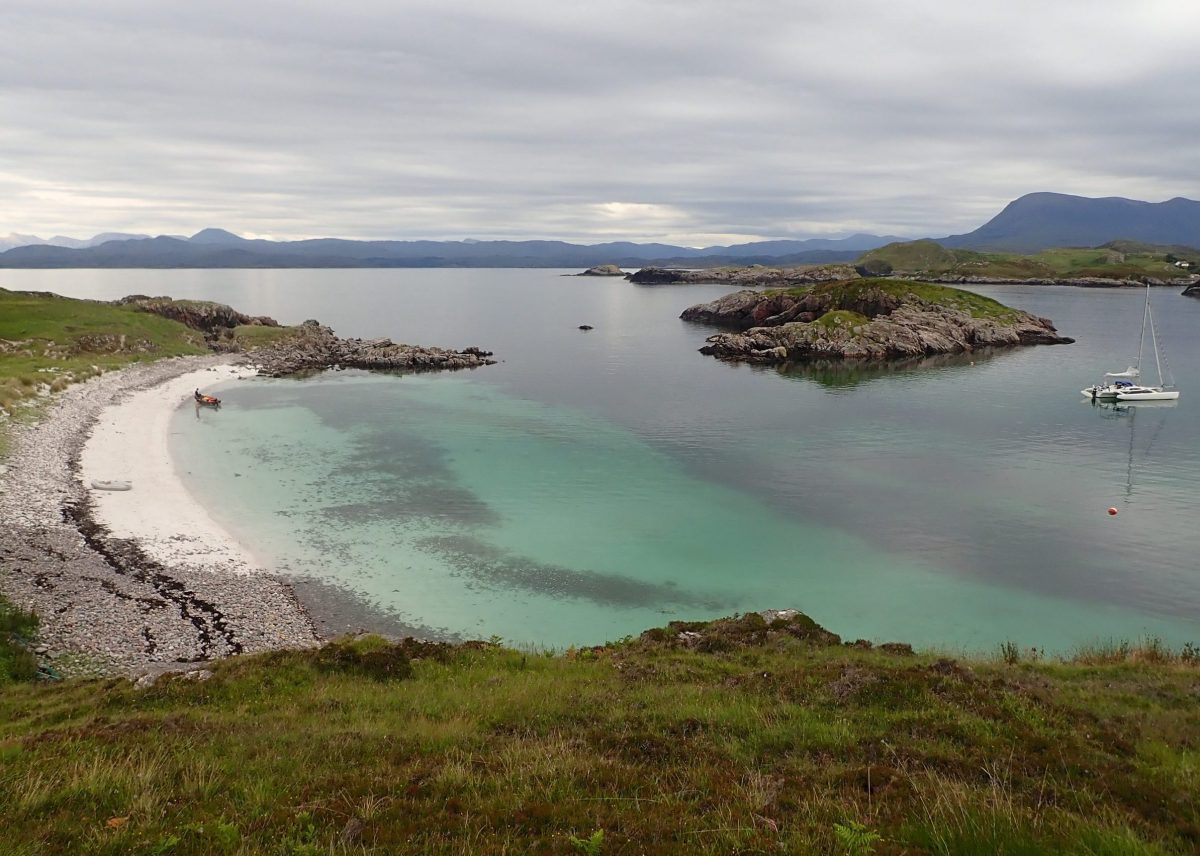
At the head of the bay lay a pristine white sandy beach. A lush machair bank framed the sand beautifully. Moreover, bare rocks and scattered boulders dotted this rare coastal habitat. The bay featured a narrow entrance flanked by drying reefs. Meanwhile, low-lying islets and rising hills provided a natural shelter. It was, without doubt, a sailor’s dream.
I slowly circled the bay to check the depths. Afterward, I selected a spot dead center above a sandy bottom. The crystal-clear water made the perfect location easy to find. Finally, the anchor landed with a gentle splash. We secured a firm hold for the night.
We settled, cut the engine and soaked up the silence and beauty of the bay.
Landing Ashore
We secured our yacht, Trade Winds, in the tranquil bay. Afterward, we brewed coffee and relaxed for thirty minutes. We watched carefully to ensure our anchor held firm. With the boat steady, we hopped into the dinghy. We rowed toward the white sandy beach.
The moment we touched land, the natural beauty struck us. The beach sat between machair grasslands and rugged hills. Consequently, it felt like a hidden paradise far from everyday life.
However, we were not alone. Across the bay, a small fire flickered in a gully. Three young girls laughed and played along the shore. Meanwhile, we walked across the machair and met a friendly man. He wore bright yellow wellies and greeted us warmly. He explained that he owned the island. Additionally, he mentioned the girls were visiting from London.
The contrast felt striking. In particular, it highlighted the difference between city life and this wilderness. This was a moment of deep reflection. Ultimately, it reminded us how refreshing life feels in nature.
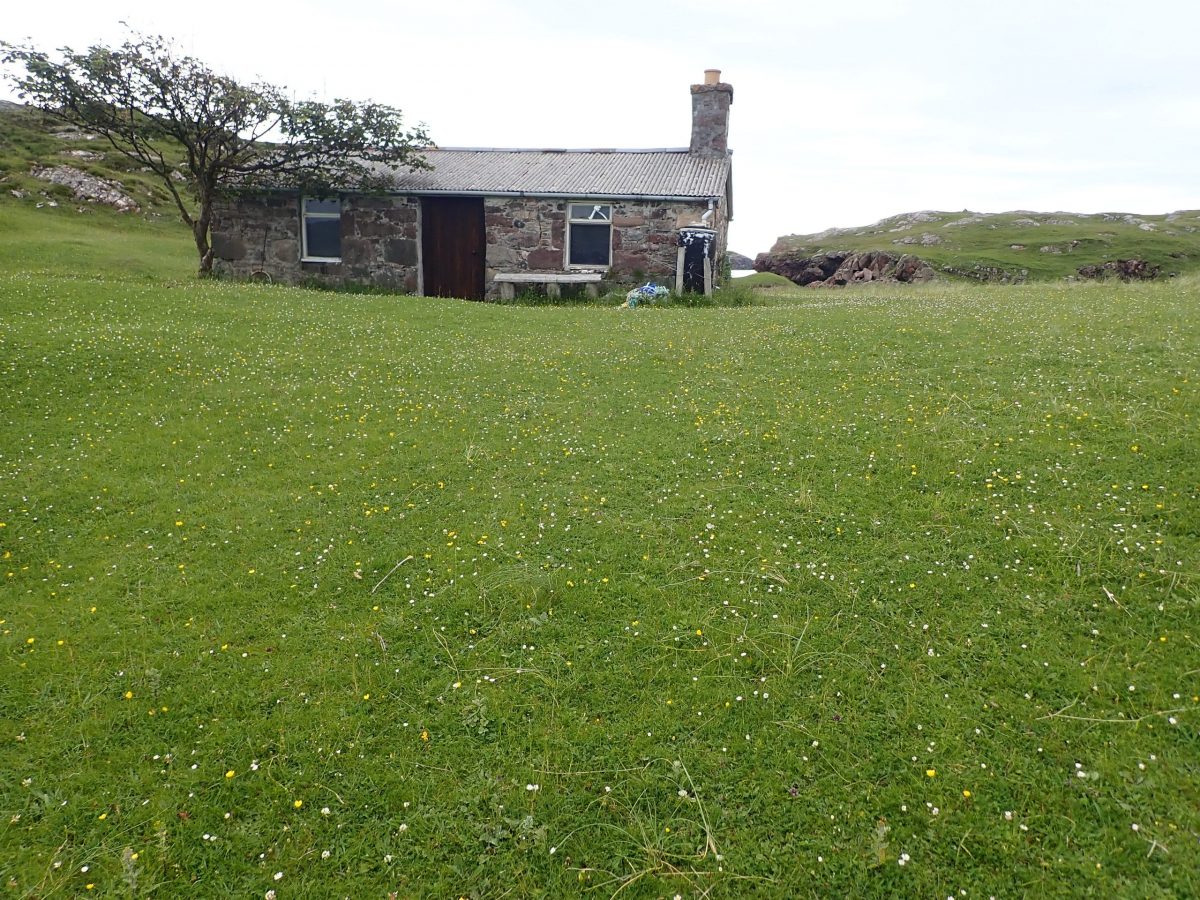
A Doctor’s Retreat: The Story of the Cottage
We explored the peaceful shores of Oldany Island. During our walk, we discovered a charming story about the bothy. This modest cottage sits high above the bay. Specifically, it offers sweeping views of the white beach and green grasslands.
Locals explained that the cottage once served a well respected doctor. Regularly, he escaped his medical duties to pursue his passion for fishing. He loved the remote Scottish Highlands. However, the mainland community worried he might be unreachable during emergencies.
Consequently, the residents worked together to help him. They installed electricity and a telephone line on the island. Furthermore, this extraordinary gesture showed how people cared for one another “back in the day.”
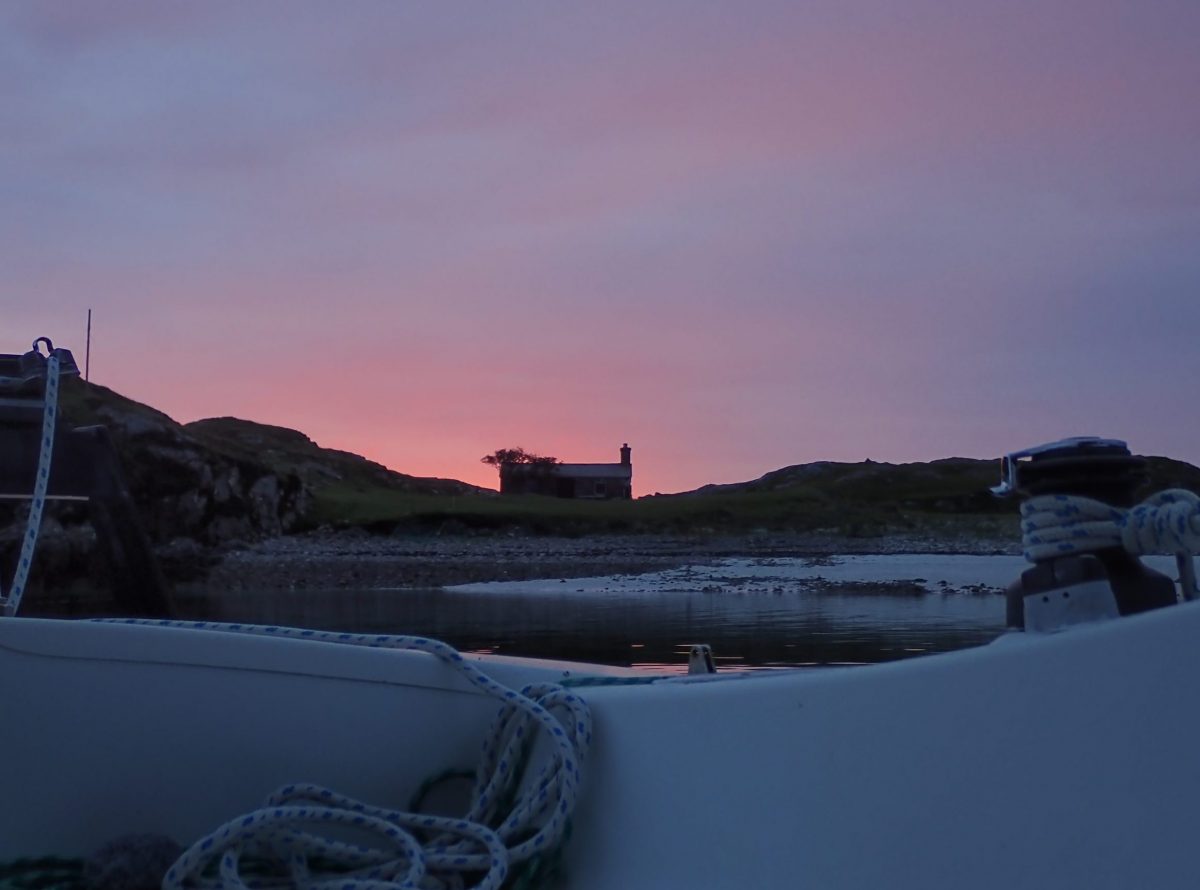
After our chat, we wandered off to enjoy the serenity. The boat remained anchored securely in the golden evening light. We simply relaxed in the untouched beauty. We felt completely immersed in the wild northwest coast.
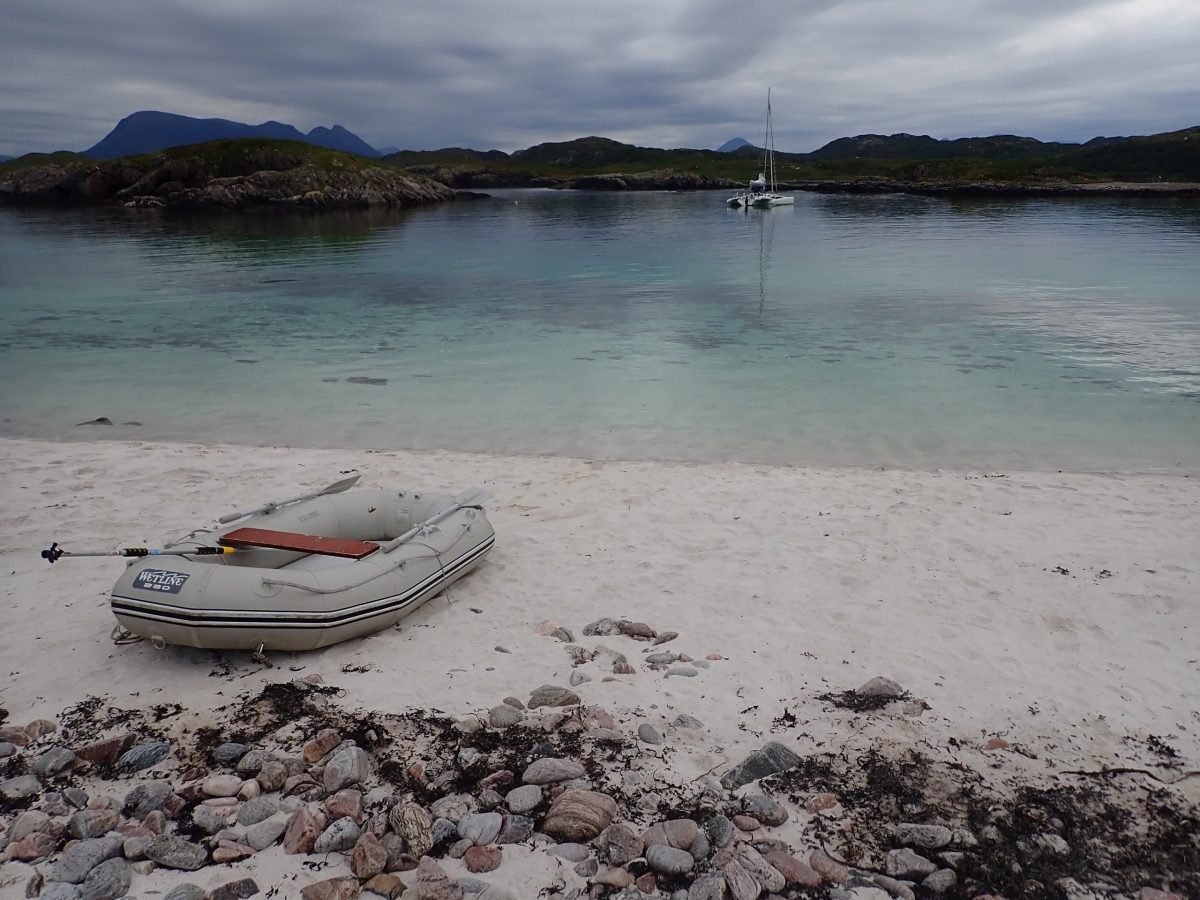
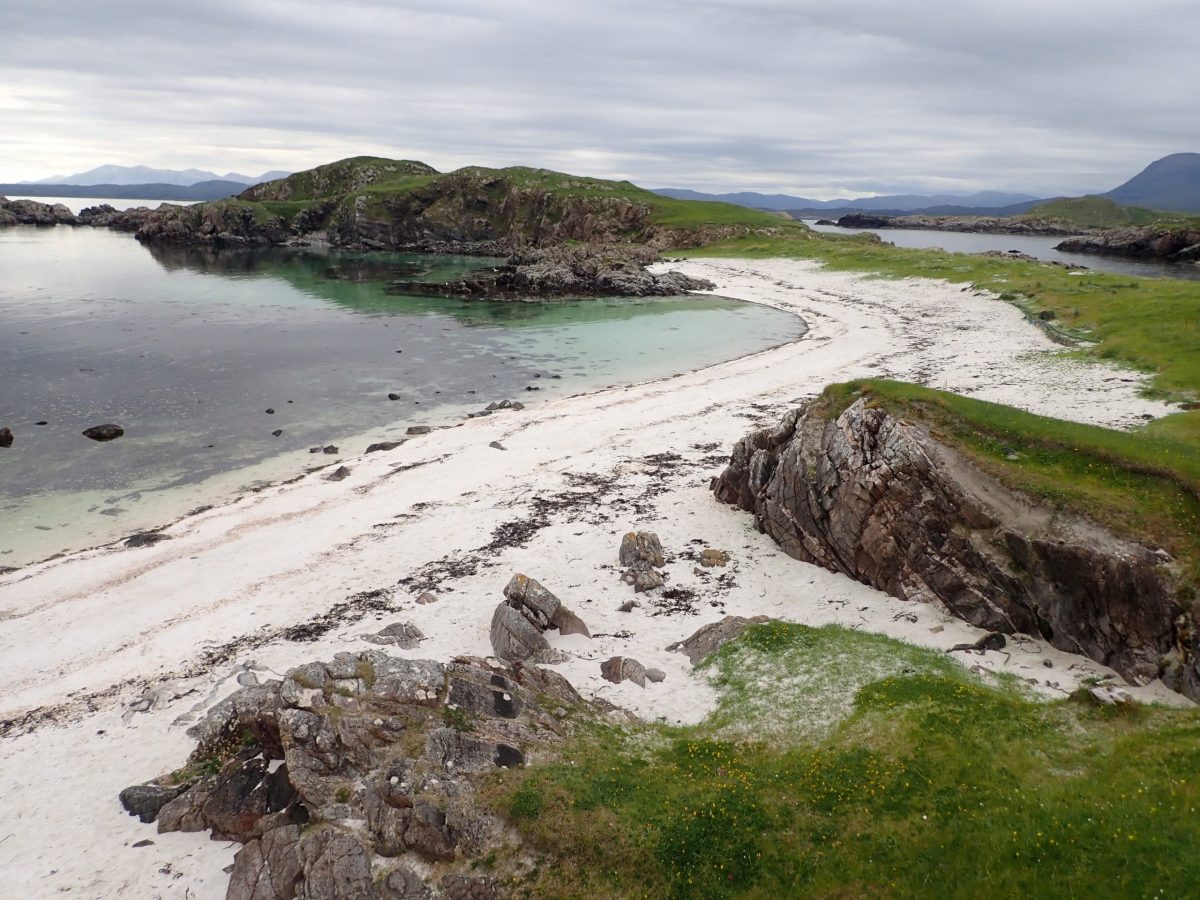
Calm evening aboard
We retired to Trade Winds to enjoy a wonderful calm still evening under the stars and moon with not a soul to be seen or heard. It would also be fair to say we gave the store of whisky and good hammering that evening.
Time to explore
The following morning brought fresh energy and a renewed sense of adventure. It was time to set sail for Handa Island, but first—I had unfinished business. The summit of Oldany Island still called to me.
Studying the map, I spotted a promising route from the northwest shore, offering a relatively short ascent to the top. We weighed anchor and gently slipped away from our now affectionately named ‘Hangover Bay’, a place that had gifted us unforgettable memories and perfect anchorage.
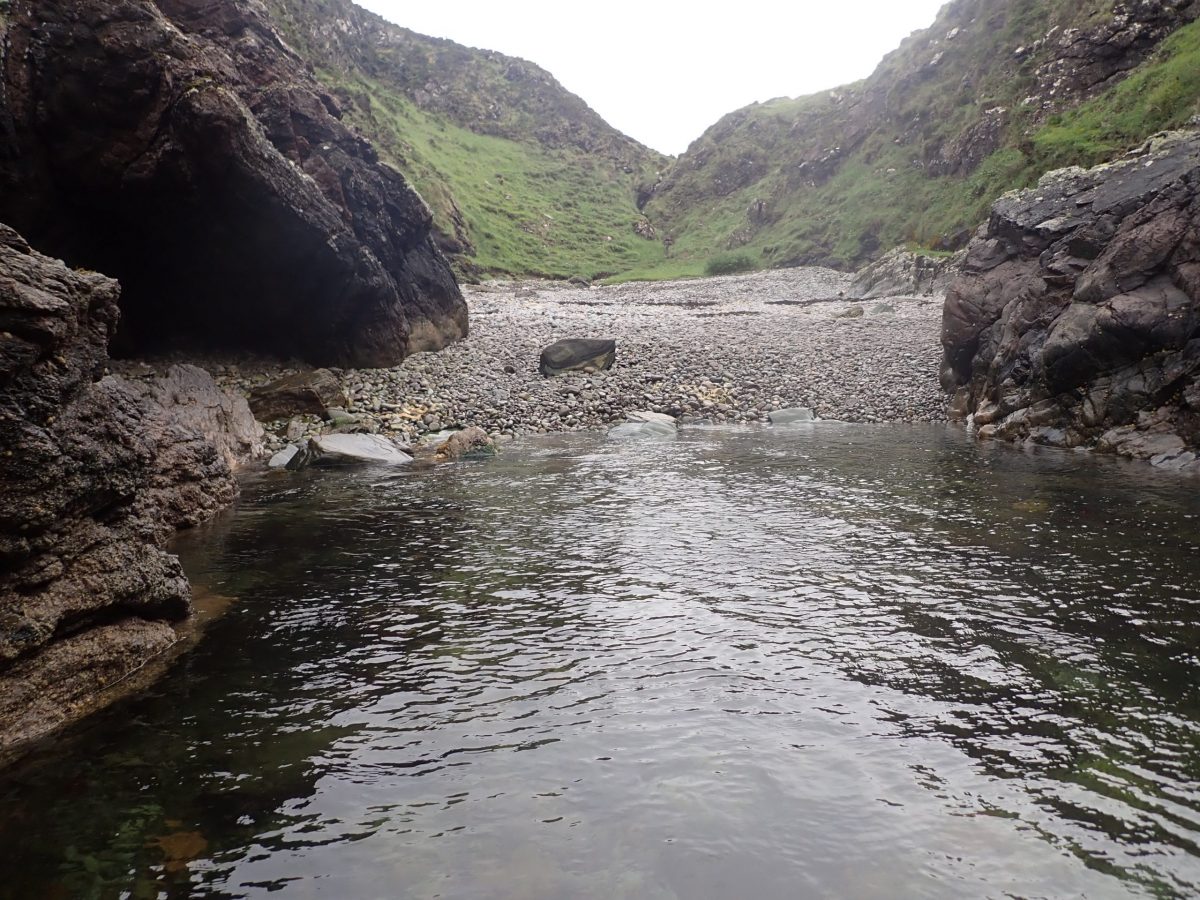
Our next challenge was finding a suitable landing spot along Oldany’s rugged, rocky coastline. The shoreline was steep and dramatic, but the thrill of exploration kept us scanning for a safe entry point to begin the climb.
Climbing Oldany Island: From Boulder Beach to Summit Surprise
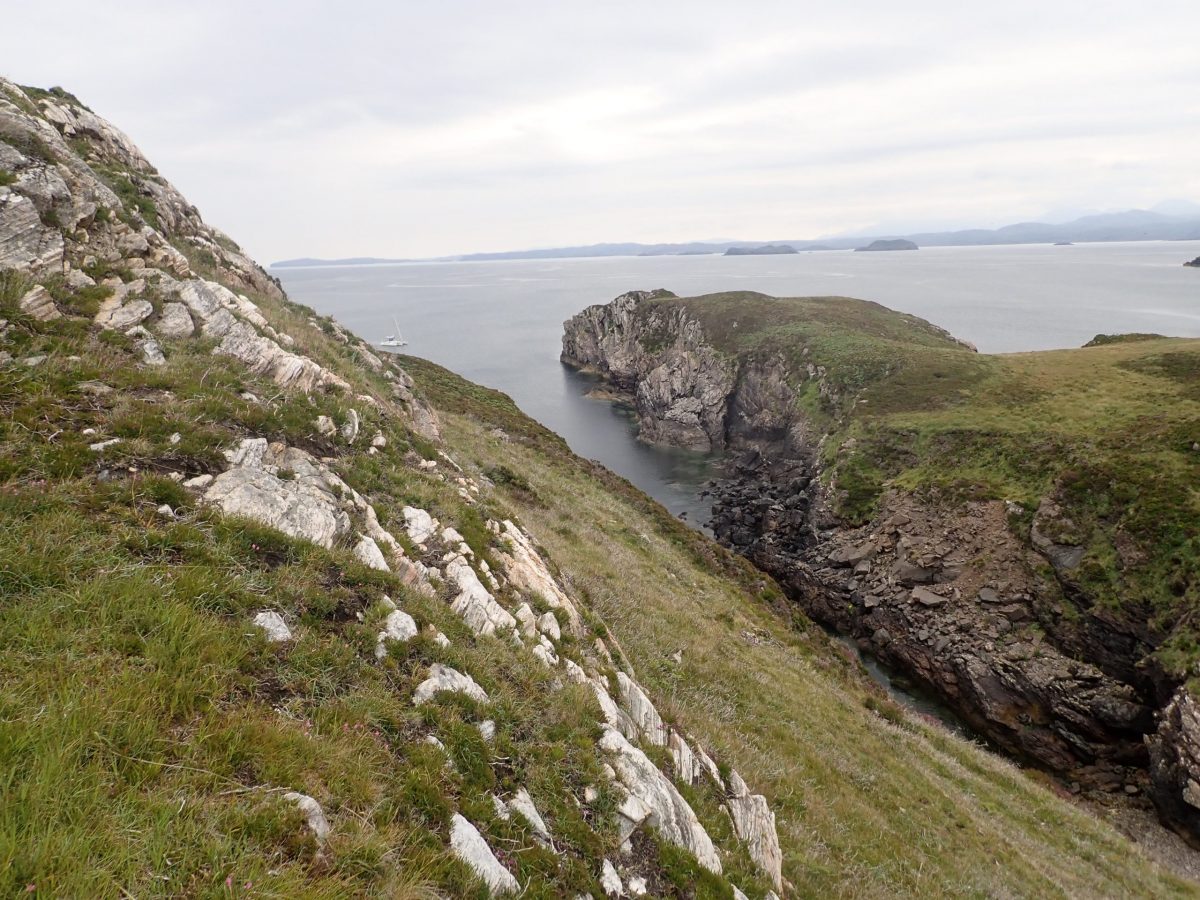
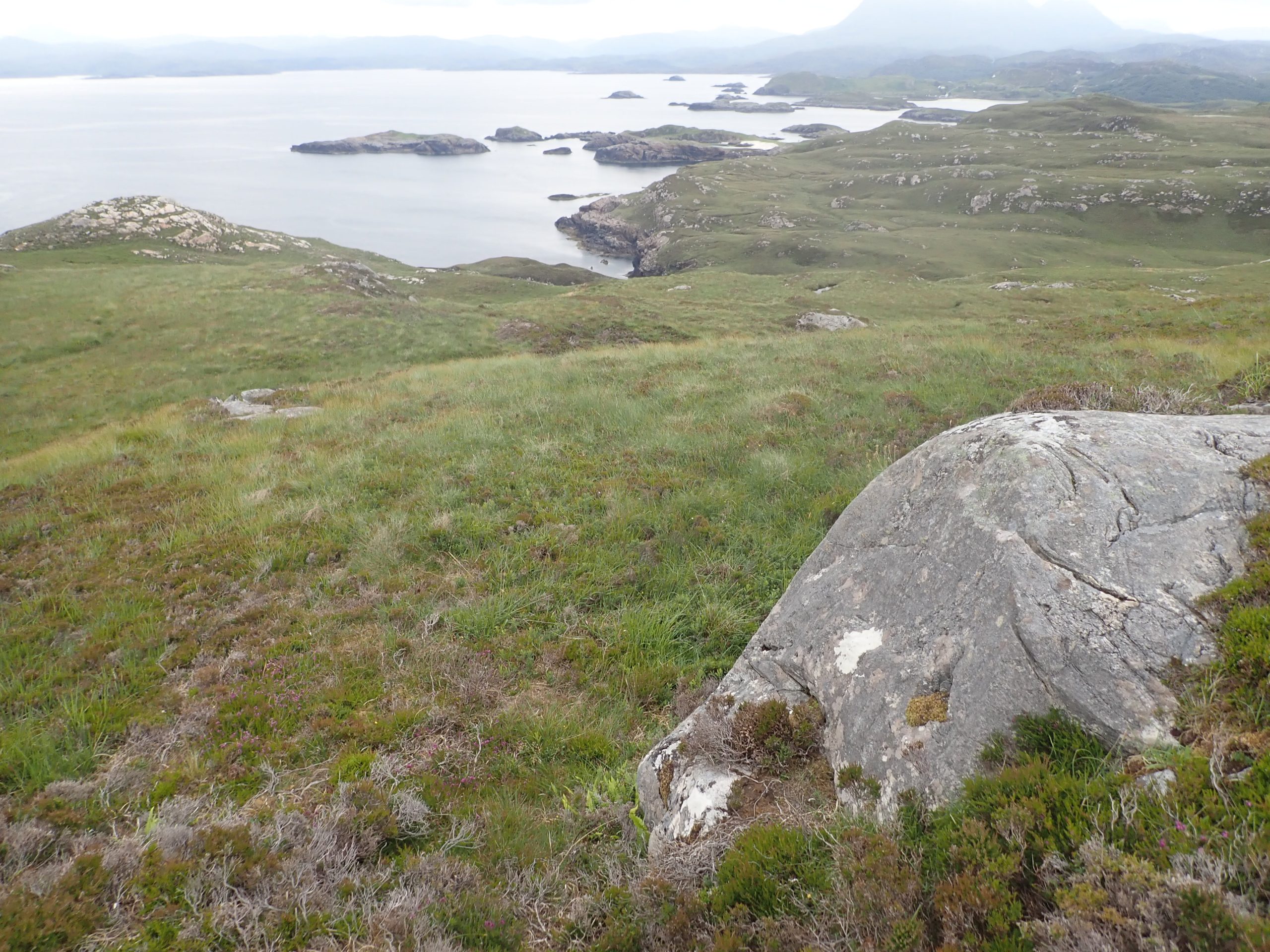
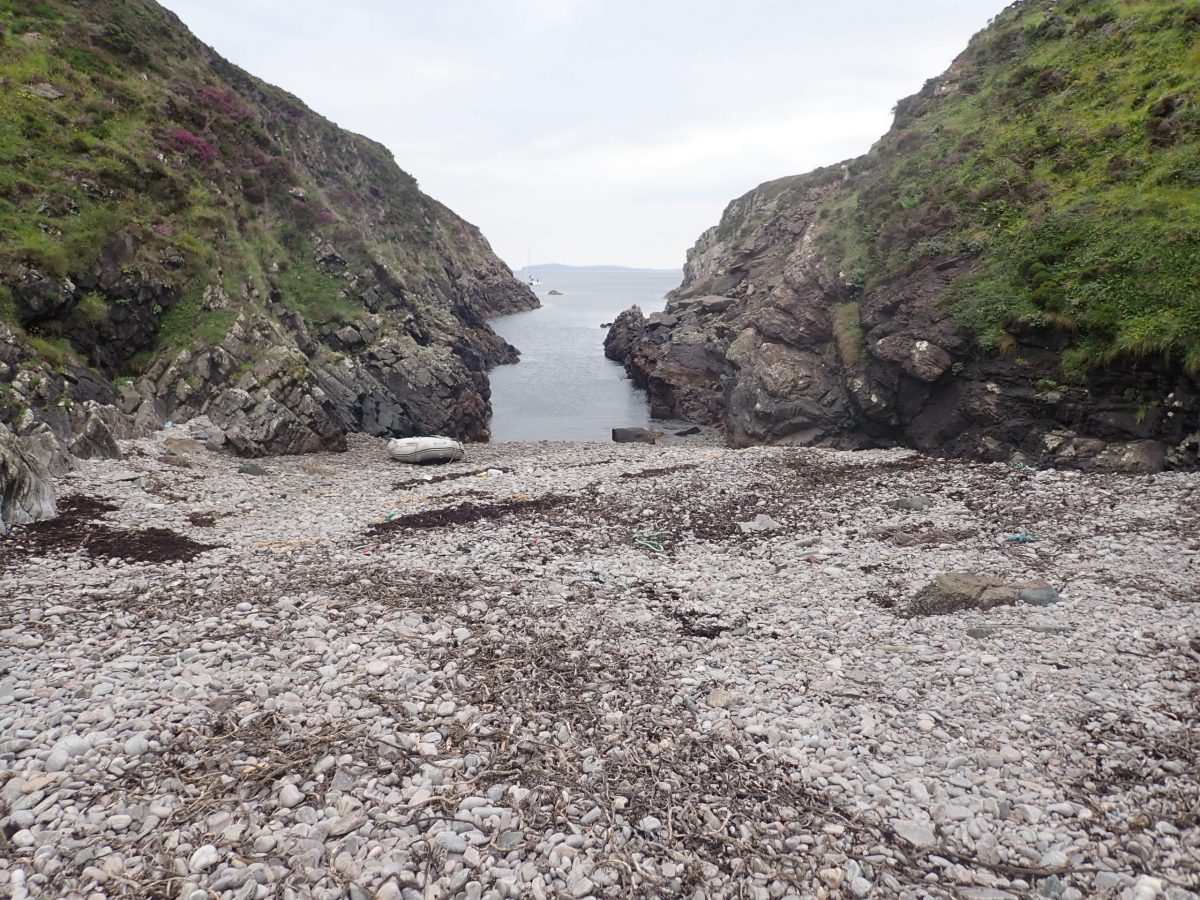
A dramatic ravine and weathered gully carved into the rocky coastline offered a natural gateway to begin my ascent of Oldany Island. Leaving Gordon and Ranald aboard Trade Winds, I rowed ashore solo, navigating toward the head of the gully and landing on a striking boulder-strewn beach.
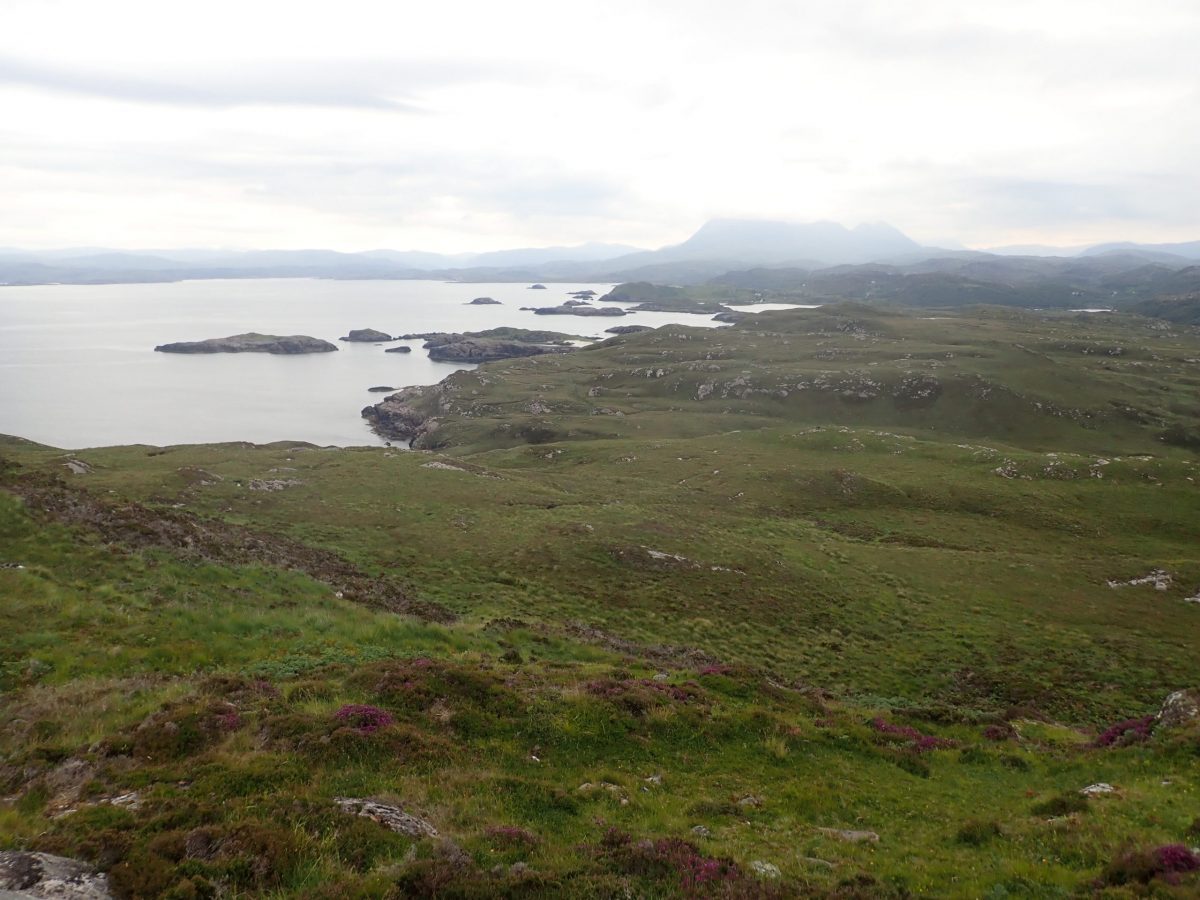
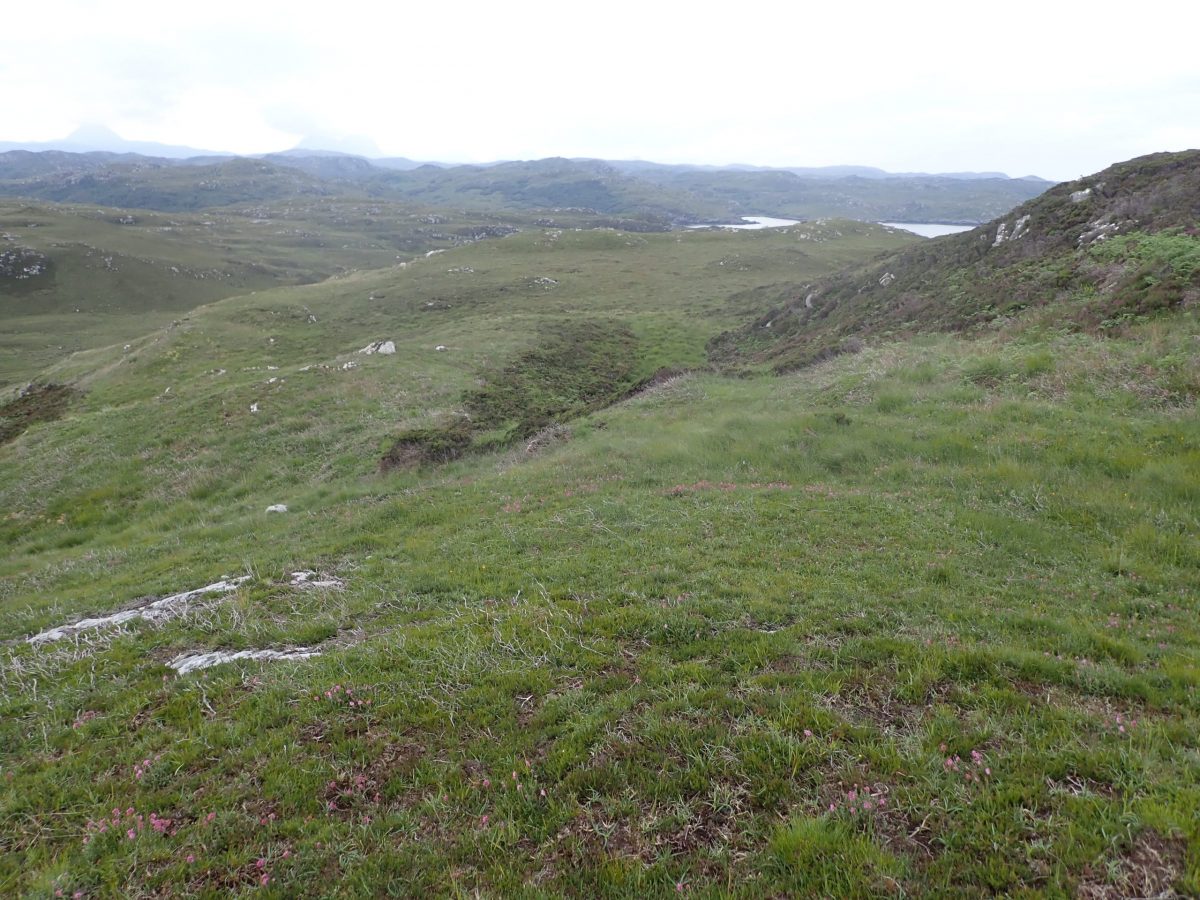
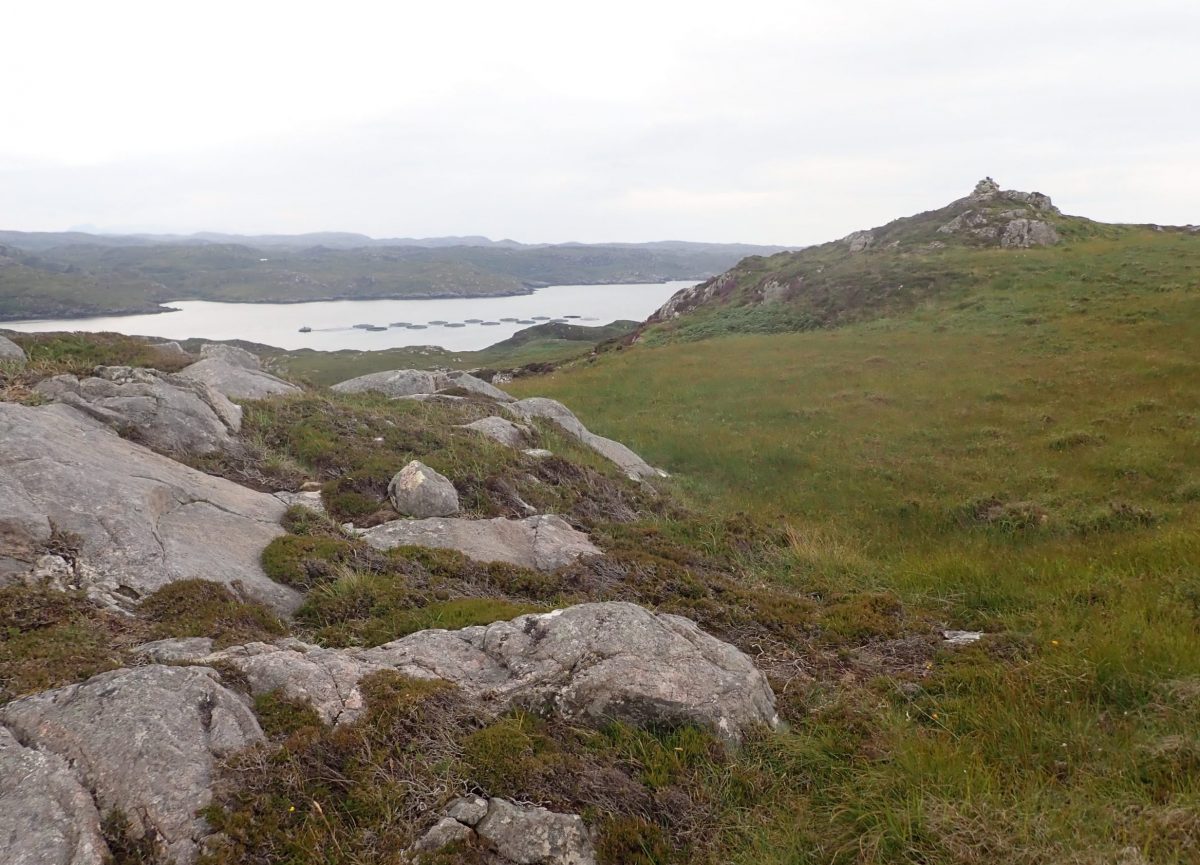
After hauling the dinghy well above the tide line and securing it to large boulders, I set off on foot. The terrain was challenging—dense heather, slippery grass, and patches of wet bog slowed progress and made route-finding a test of patience. The summit wasn’t immediately obvious, and a brief detour led me up a ridge where, at last, the cairn marking the high point came into view.
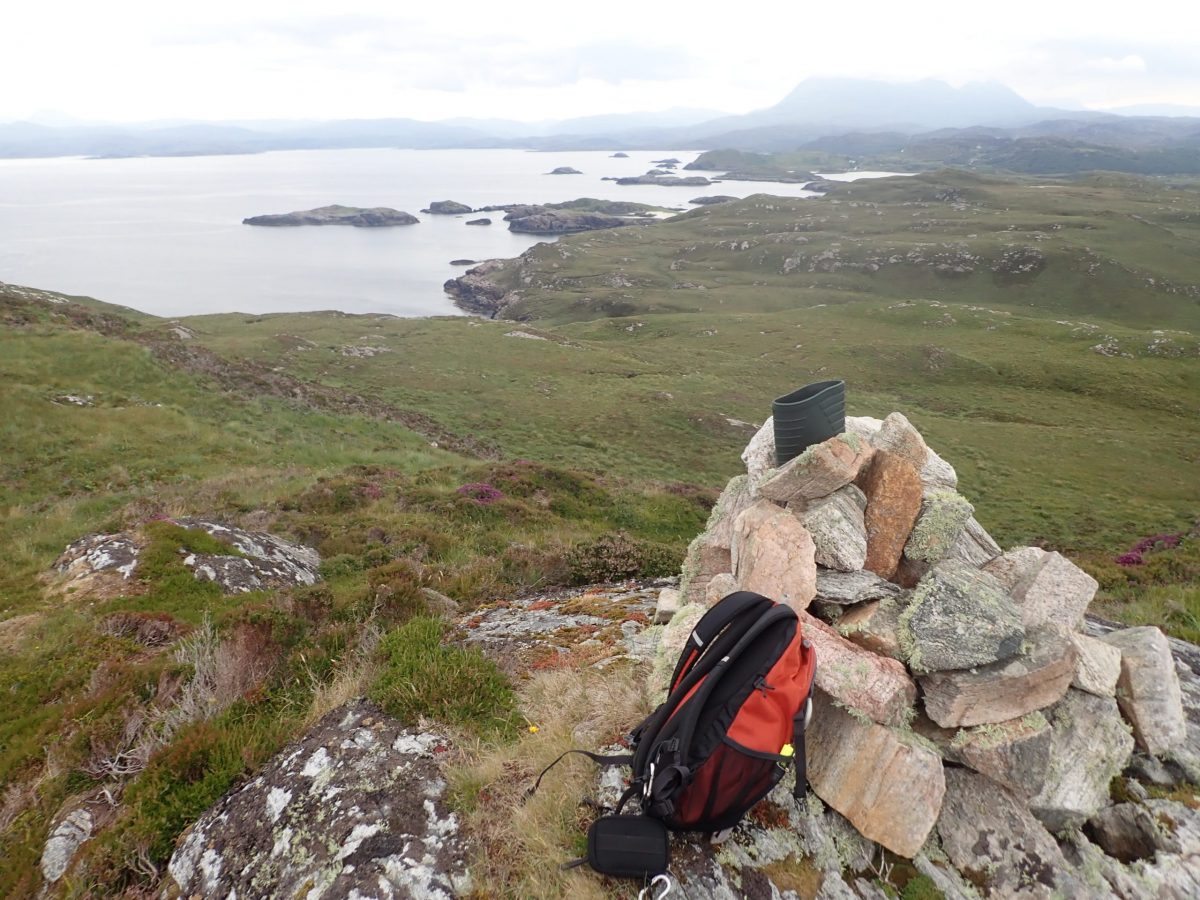
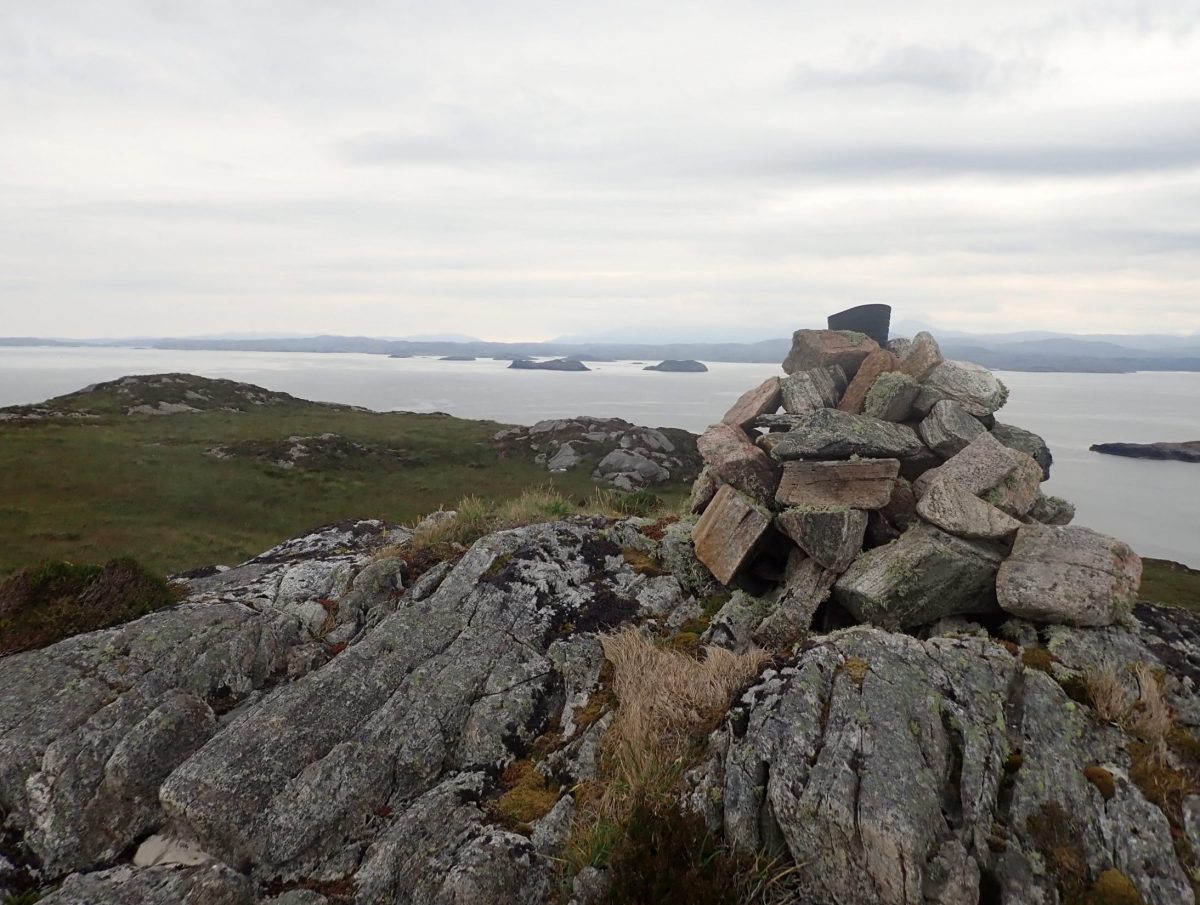
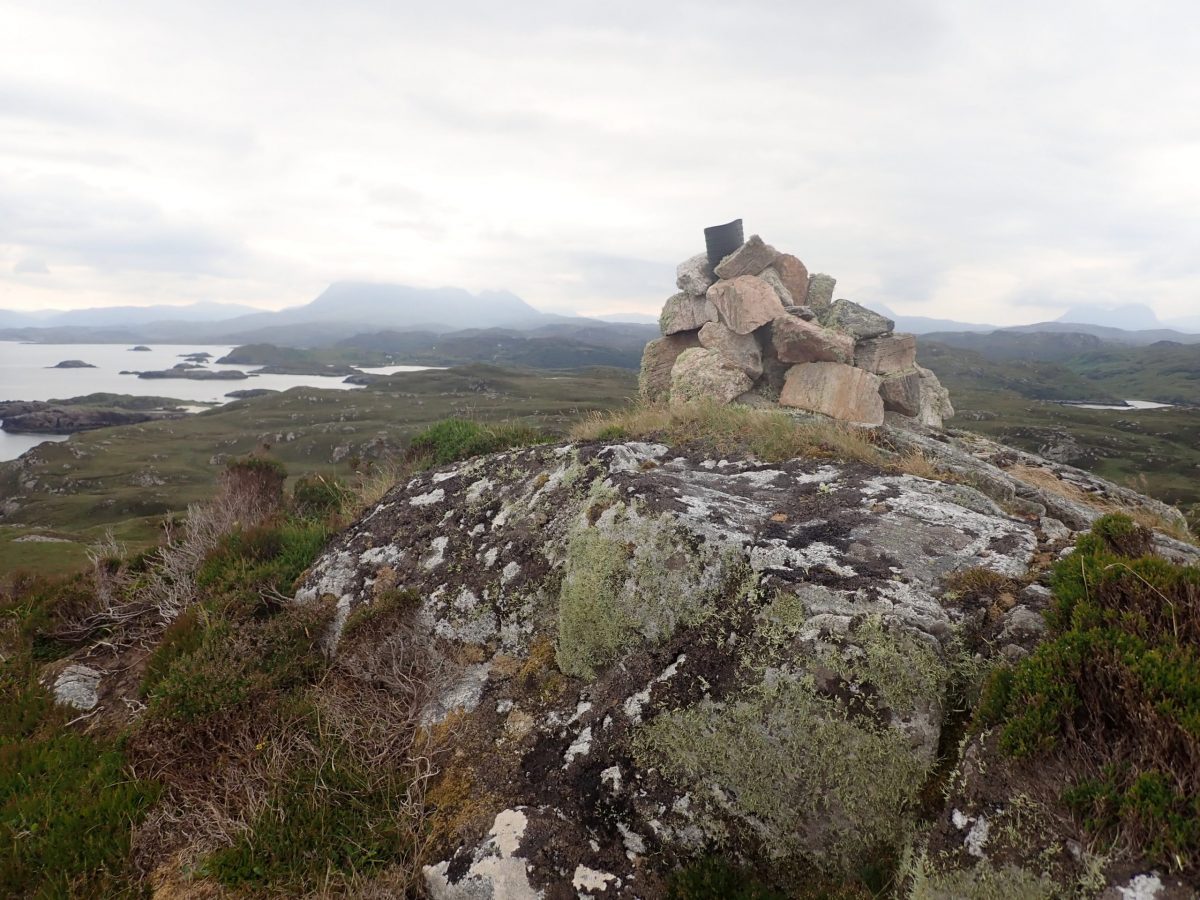
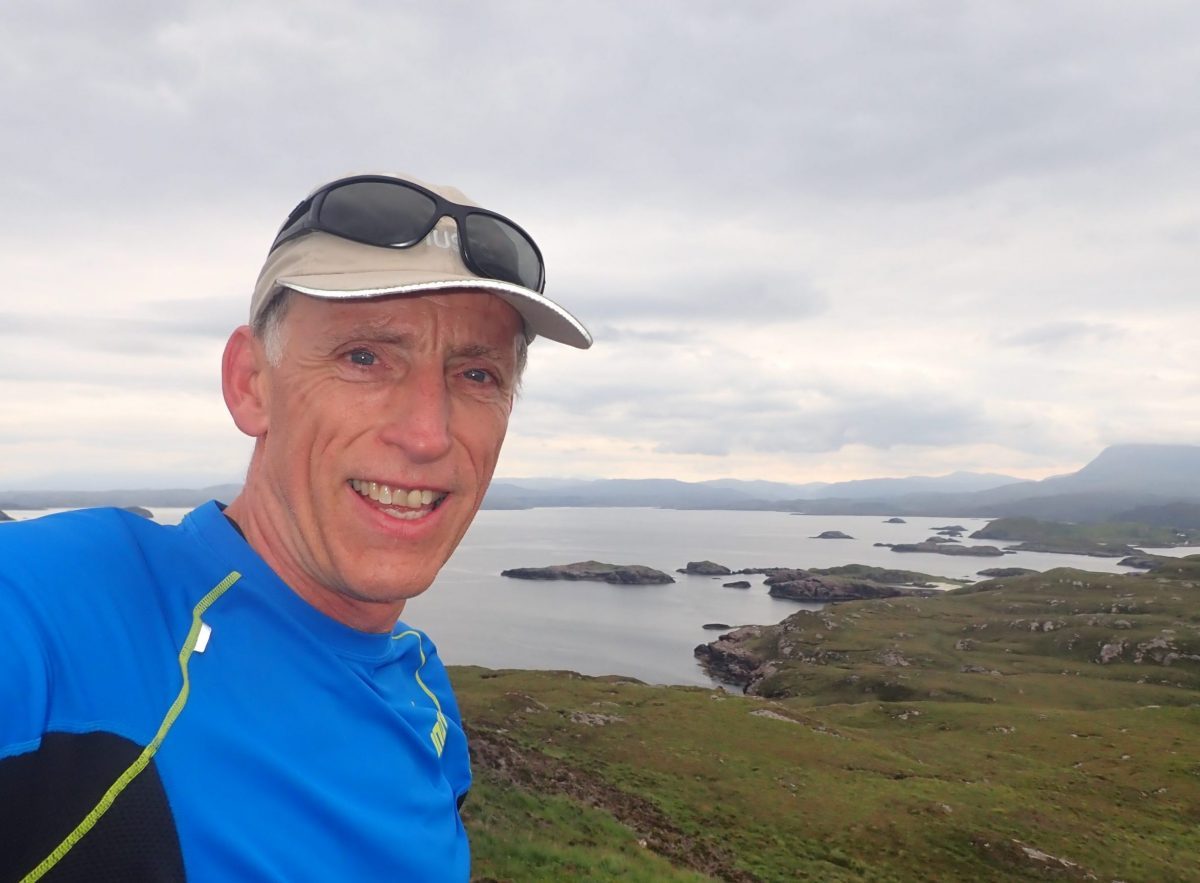
A wide grin spread across my face as I reached the top. The cairn, cloaked in a thick layer of lichen, had a quirky surprise: the top of a welly boot poking proudly from its crown—a humorous and unexpected reward for the climb.
Time to top the island
With the summit of Oldany Island officially conquered, it was time to move quickly—our sailing schedule to Handa Island was tight, and delays weren’t an option. After snapping a few photos to capture the moment, I began my descent toward the dinghy beached at the boulder shore.
But the island had one last twist in store.
Intent on a swift return, I veered off course and soon realized I’d become disoriented in the rugged terrain. Instead of retracing my steps, I emerged at the cliff tops on the wrong side of the island, staring out at fish farm cages bobbing in the sea—a clear sign I’d strayed far from the ravine.
With the error now obvious, I turned back and made a determined cross-island trek. Eventually, I spotted the familiar contours of the weathered gully and the boulder beach below. Relief washed over me as I reached the dinghy, ready to rejoin Gordon and Ranald and set sail for our next destination.
Lost in the Deep: Jellyfish, GoPro, and a Lesson Learned
As I rowed back toward Trade Winds, the sea transformed into a kaleidoscope of jellyfish—a thick, drifting soup of white, blue, and pink specimens, gently rocking in the slopping tide. The water slurped and gurgled against the surrounding rocks, creating an almost surreal atmosphere. It was the perfect moment to capture on my GoPro camera.
I drifted slowly through the jellyfish, mesmerized by their motion. Hungry for a better shot, I rowed back upwind and set off again to film. But in my eagerness, I made a critical error—my camera wasn’t tethered to my wrist, as it always should be.
The moment my hand touched the water, the GoPro slipped silently away, gliding down through the jellyfish and disappearing into the swaying kelp, some 15 feet below. I watched helplessly as it vanished, and yes—a few choice words escaped my lips.
Back aboard Trade Winds, Gordon and Ranald were already in stitches, howling with laughter. They knew exactly what had happened the moment they saw my face. True friends, indeed—ready to laugh when you need it most.
Ancient Echoes: The Burial Grounds of Baile na Cille, Oldany Island
Tucked into the rugged landscape of Oldany Island, the site known as Baile na Cille holds deep historical and archaeological significance. This ancient burial ground, dating back to the Early Medieval period, features graves outlined with flat stones, some of which are topped with similar slabs—marking the resting places of long-forgotten souls.
At the rear of the burial ground, nestled against the hillside, lie the ruins of a primitive stone structure. Constructed from upright slabs—some as large as 3 feet high and 1 foot thick—the building is roughly rectangular, measuring about 12 by 10 feet, with an entrance facing east. Nearby, a smaller attached structure contains a circular stone feature, possibly an oven, suggesting domestic or ritual use.
Adjacent to the burial ground stands a substantial cairn of stones, believed by some to have once served as a Pagan temple. Within the cairn is a hollowed stone with a lid, which, according to local lore, held a brightly coloured round stone revered by islanders until the 18th century. This sacred object was shown to visitors as a curiosity, and its presence led early observers to conclude the site was Pagan in origin, rather than Christian—describing the hollowed stone as “not a Popish font.”
Surrounding the area are remnants of small circular and oval huts, likely shielings used seasonally by shepherds or early settlers. The entire site is enclosed by a crude stone wall, blending seamlessly with the natural rock outcrops, and offers a haunting glimpse into Scotland’s ancient spiritual landscape.
References
Wikipedia
Canmore
Haswell-Smith, Hamish (2004). The Scottish Islands. Edinburgh: Canongate. ISBN 1841954543.
Nearby Scotislands
Image Gallery