Introduction
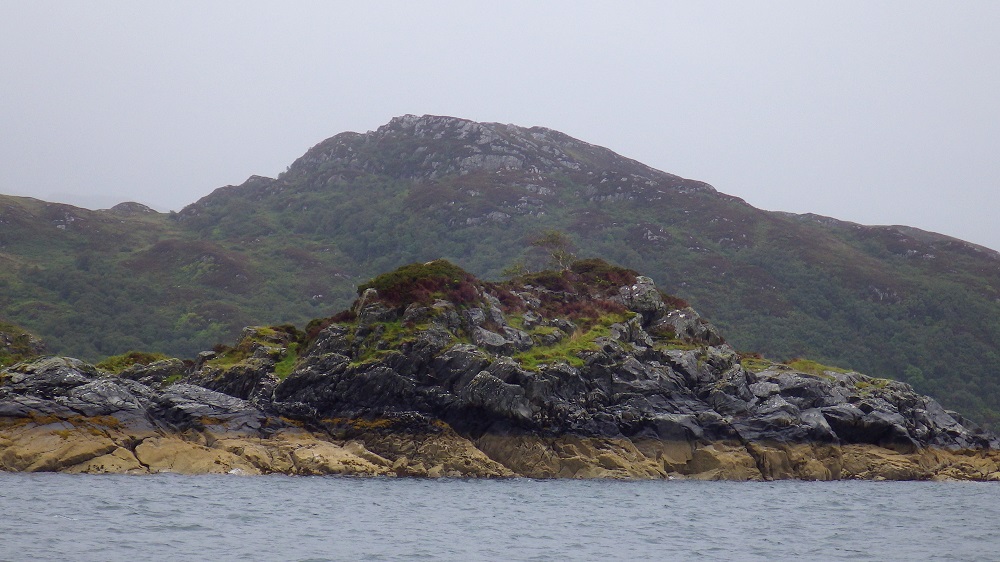
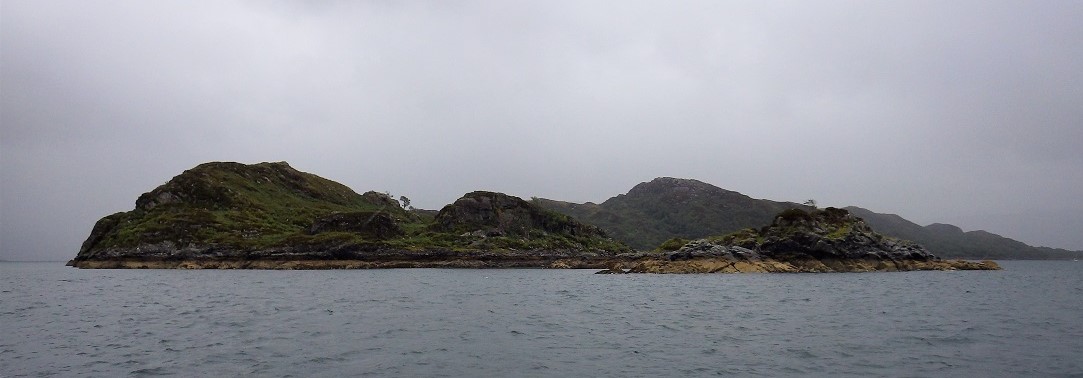
Risga is an uninhabited Scottish island located between Càrna and Oronsay at the entrance to Loch Sunart.
Where is Risga Loch Sunart
Island Experience
Exploring Risga Island: A Glimpse into Scotland’s Ancient Past
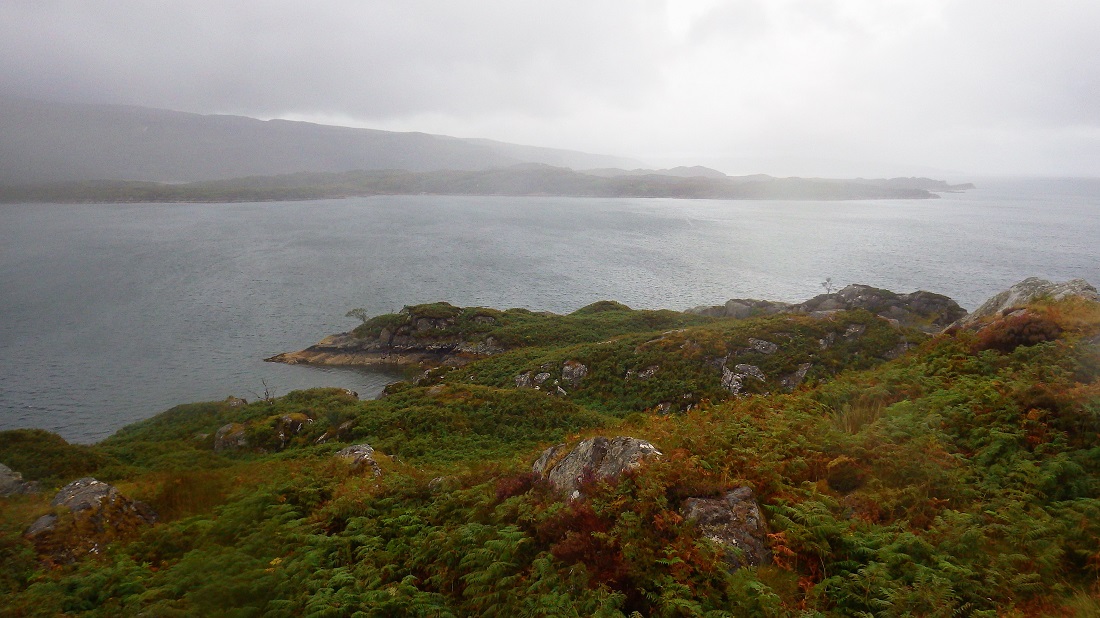
Risga may not be the largest of the Scottish islands, spanning just 12 hectares with a modest peak of 43 meters, yet it holds a weight far beyond its size. Nestled within the grounds of Glenborrodale Castle and protected as part of the Sunart Site of Special Scientific Interest (SSSI), this island carries a name gifted by the Norsemen of old.
To the naked eye, Risga appears as a lonely silhouette against the Atlantic. However, for those who look closer, it serves as a silent witness to millennia of human history.
A Brief and Stormy Visit
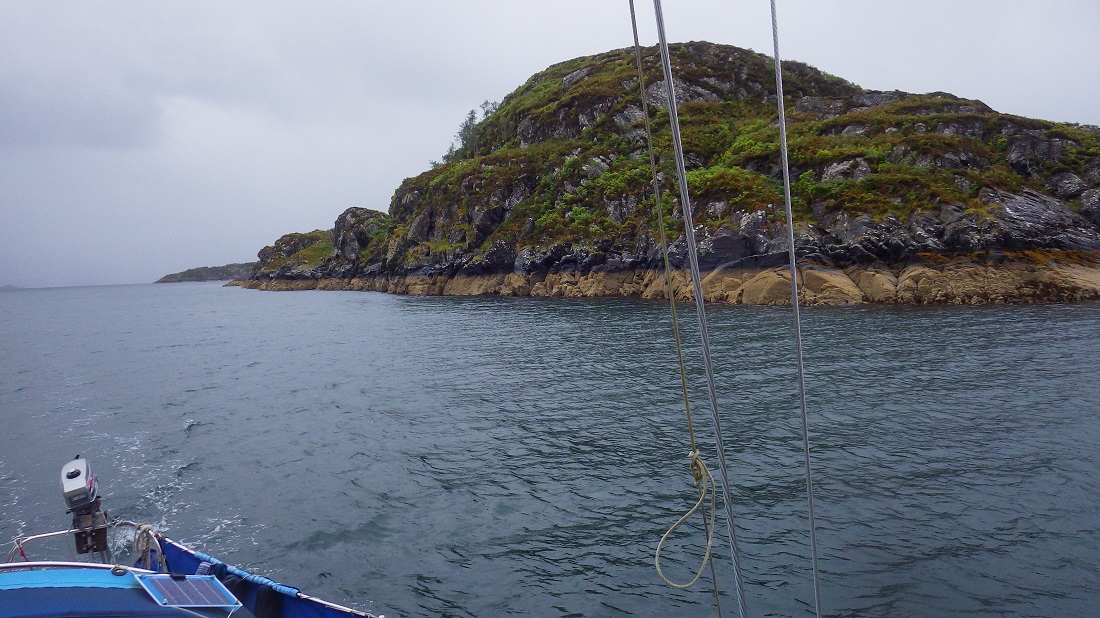
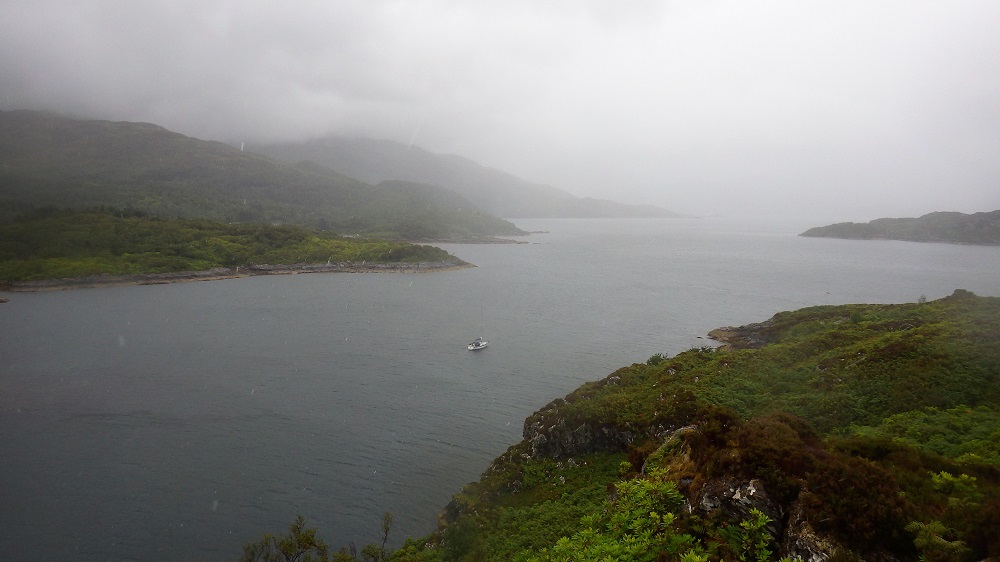
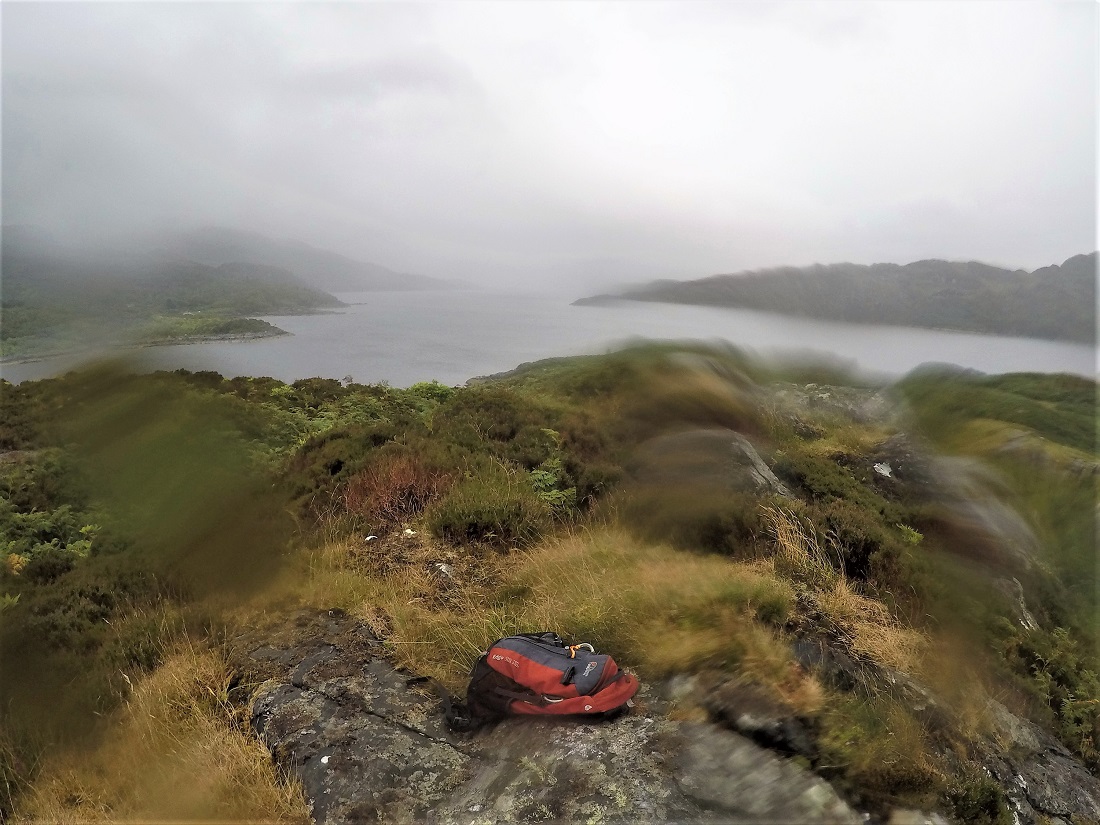
Our journey to the island was a fleeting affair, dictated by the unpredictability of the Scottish weather. As torrential rain began to blur the horizon, Willie and I disembarked from the Nordic Fulmar and navigated toward the craggy, seaweed-strewn shore.
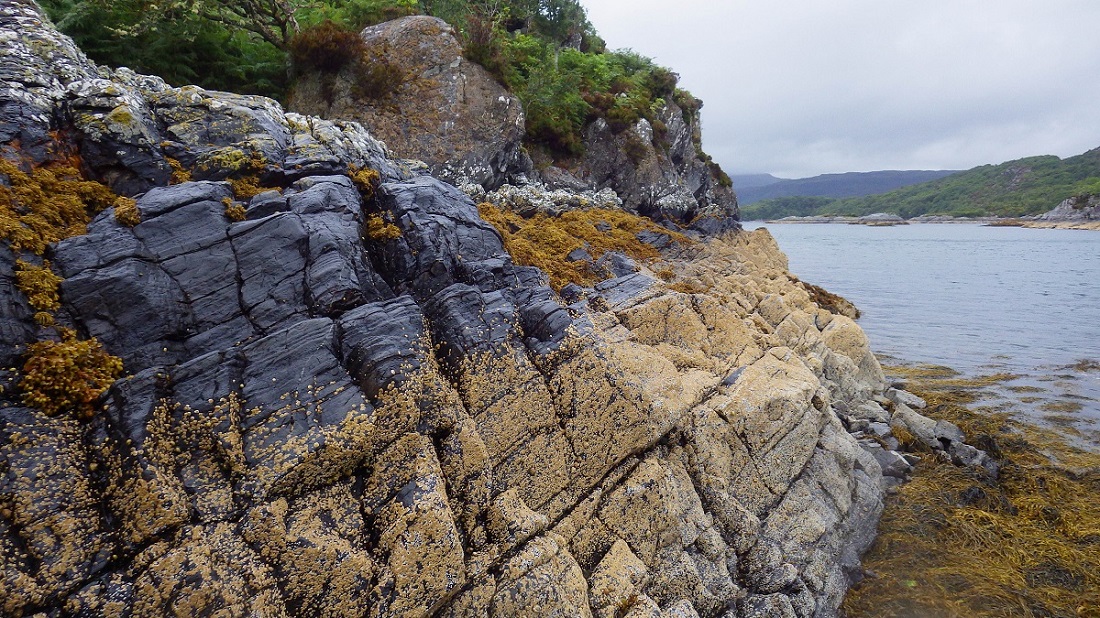
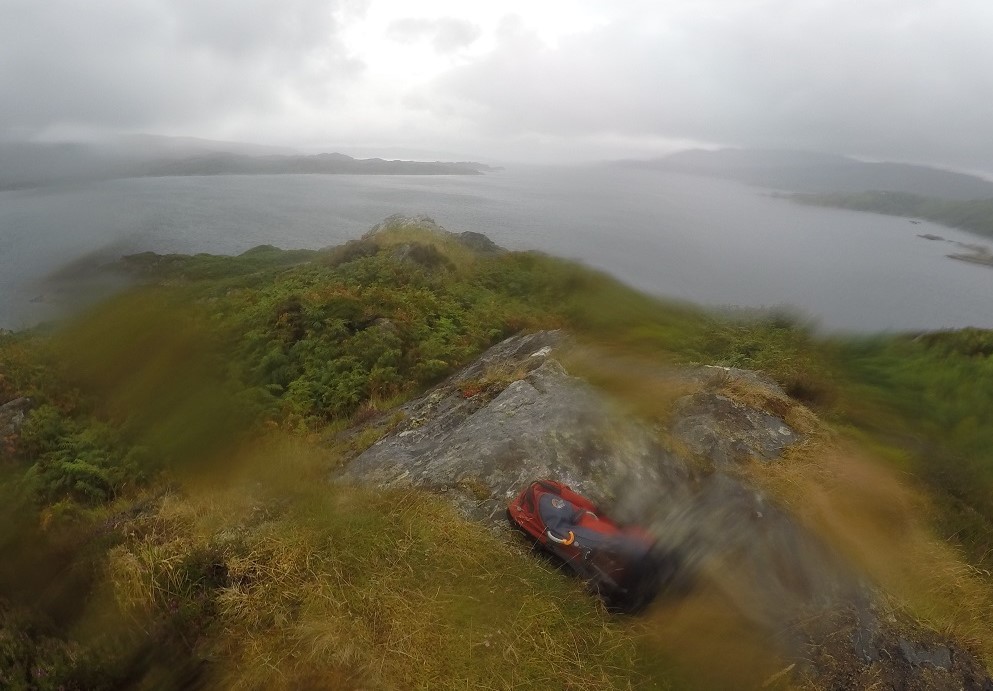
Flora, wild and rough grew right down to the waterline. We knew the ascent would be a “wet trudge” through thick bracken and claggy heather. Indeed, the terrain did not disappoint. We scrambled through the undergrowth, eventually reaching the summit to face a wall of horizontal rain hurtling in from the West.
Because the elements were so fierce, we spent a mere 15 minutes on the island—just enough time to capture a few photographs before retreating to the warmth of hot tea aboard the yacht. It was a reminder of how small we are against the ancient cadence of the sea.
Navigation and Anchorage
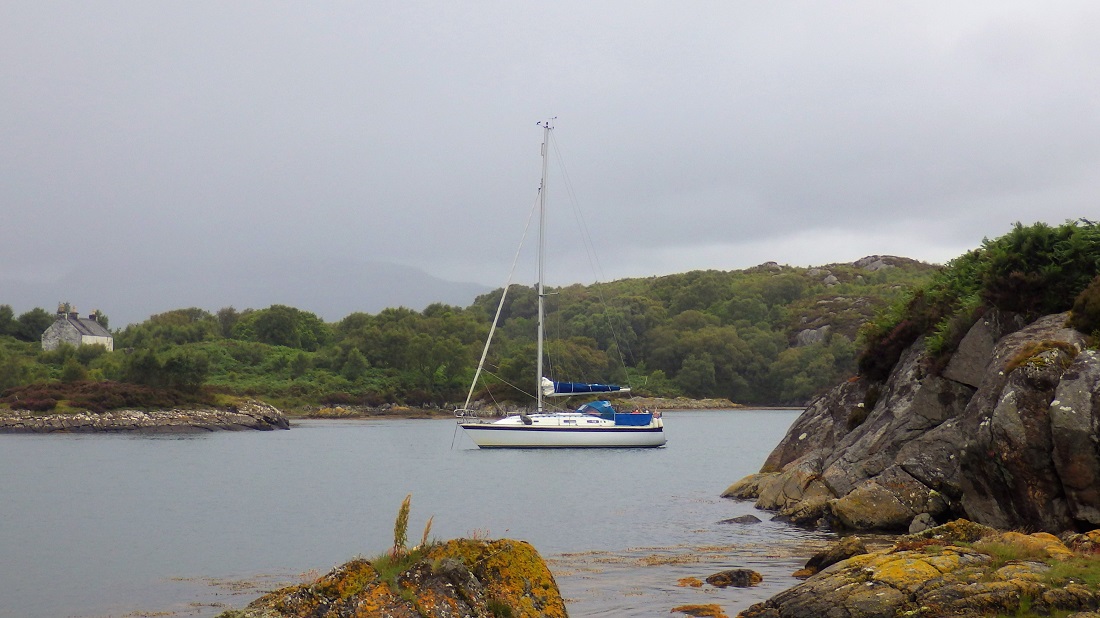
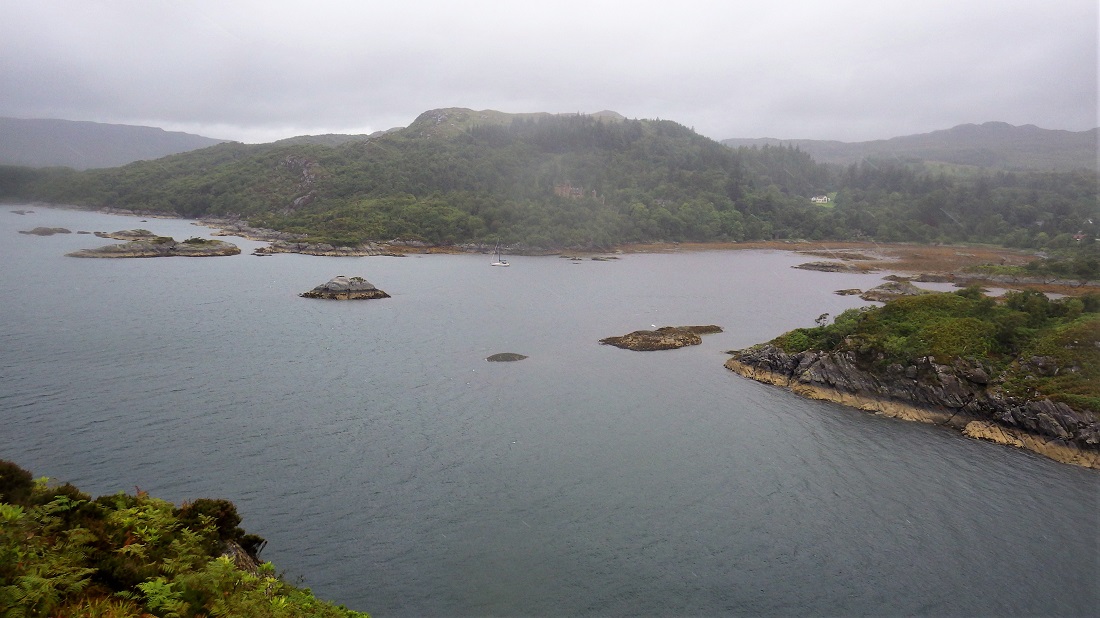
For those sailing the Ardnamurchan coast, Risga offers few invitations. There is no obvious anchorage, and many might see little reason to visit this “rock”. Nevertheless, Eilean Fheidh bay to the north provides some shelter, tucked behind the island and the lee of the Morvern mainland.
History of Risga
While our visit was brief, the history of Risga stretches back to the dawn of human presence in Northern Argyll. Between 1920 and 1921, archaeologists recovered Mesolithic materials that now reside in the Hunterian Museum and Kelvingrove Art Gallery.
The island’s most profound feature is a shell midden—a grass-covered mound that serves as a prehistoric archive. This scheduled monument, measuring roughly 30 by 10 meters, reveals the dietary history of settlers who lived here between 5000 and 2500 BC.
-
Ancient Diet: Excavations revealed the prey species of early hunter-gatherers.
-
Cultural Significance: These middens represent some of the earliest human footprints in the region.
-
Location: Interestingly, this archaeological site lies just outside the official SSSI area.
For fuller archaeological notes please visit Canmore https://canmore.org.uk/site/22508/risga-loch-sunart
Nearby Scotislands
Eilean Nan Eildean Loch Sunart
Source
Haswell Smith
Wikipedia
Canmore
Image Gallery